
AI Product Listing Generator: Create Optimized E-commerce Listings Faster
Vertical: E-commerce & Retail
Tagline: Turn one product photo into a fully optimized, multi-channel listing — in minutes.
An AI product listing generator helps e-commerce sellers turn product photos and basic specifications into optimized marketplace listings. Instead of writing titles, bullet points, descriptions, and tags for every SKU, sellers can automate the first draft and adapt it for different sales channels.
As a result, teams can spend less time creating product content and more time improving their catalog and growing sales.
The Problem: Creating Product Listings Takes Too Much Time
E-commerce sellers often spend hours creating content for each product. They need to write product titles, feature bullets, descriptions, search keywords, and marketplace-specific content.
The work becomes even more repetitive when the same product appears on Shopify, Amazon, Etsy, and WooCommerce.
Furthermore, many sellers rarely update listings after publishing them. As customer behavior and search performance change, previously effective listings can start to underperform.
An AI product listing generator provides a faster way to create, adapt, monitor, and improve product listings across multiple channels.
Key Features
Photo-to-Listing Generation
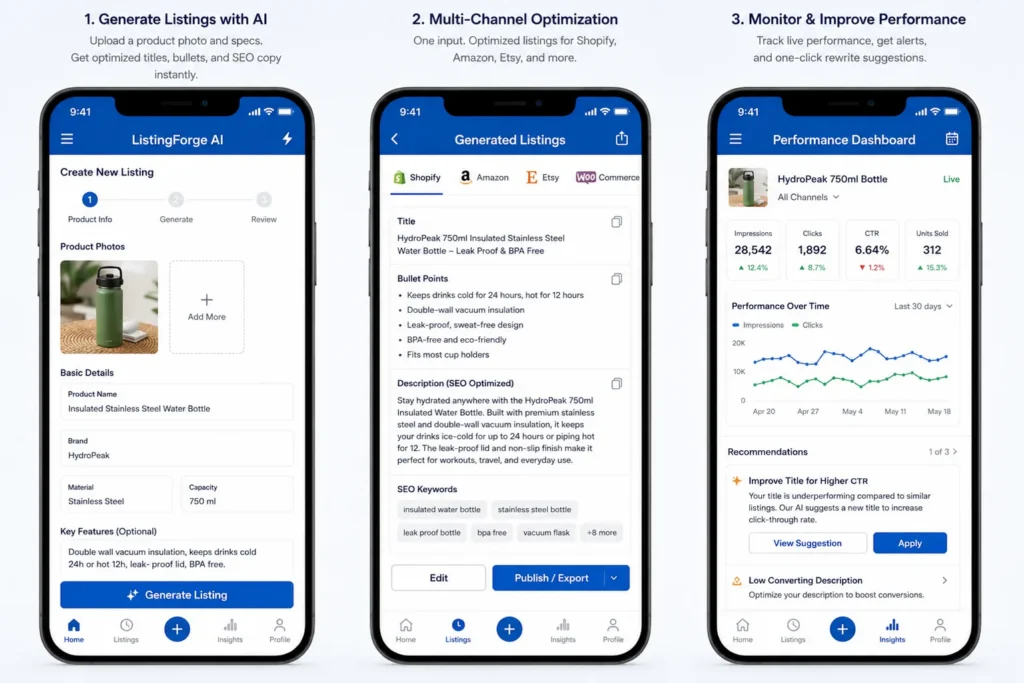
The seller uploads a product image along with basic specifications. The AI then analyzes the available information and creates a product title, feature bullets, description, and relevant tags.
This gives sellers a strong first draft without starting every listing from scratch.
Multi-Marketplace Formatting
One product can require different formatting and content for different sales channels.
The platform can create channel-specific drafts for:
- Shopify
- Amazon
- Etsy
- WooCommerce
Therefore, sellers can start with one product input instead of maintaining separate content workflows for every marketplace.
For example, Shopify’s product documentation explains how product information can be managed through its platform and APIs. Amazon Selling Partner API documentation provides resources for working with Amazon seller operations programmatically.
Marketplace SEO Optimization
The agent can analyze relevant search terms and optimize product content for each marketplace.
It can suggest improvements to titles, descriptions, bullet points, and tags based on the target channel and available keyword data.
However, optimization should focus on relevance and buyer intent rather than simply adding more keywords.
Automated Performance Monitoring
Publishing a listing is only the beginning.
The agent can monitor available performance signals and flag listings that may be underperforming. For example, it can identify products with declining clicks, weak conversion rates, or other signals that suggest the listing needs attention.
One-Click Rewrite Suggestions
When a listing underperforms, the system can suggest alternative titles, descriptions, bullets, or other content.
These suggestions can use available click-through and conversion data to make revisions more relevant to actual customer behavior.
Bulk Catalog Updates
Sellers with large catalogs can upload multiple products at once.
As a result, teams can refresh dozens or hundreds of listings without manually opening every product record.
How the AI Product Listing Generator Works
The workflow is designed to move from product information to optimized listings with minimal manual effort.
- Upload product information: The seller provides product photos, specifications, and other relevant details.
- Analyze the product: The AI identifies important product attributes from the available information.
- Generate listing content: The agent creates titles, bullets, descriptions, keywords, and tags.
- Adapt for each channel: The system formats the content for the selected marketplace.
- Review and publish: Sellers can review the generated content before publishing or exporting it.
- Monitor performance: The agent tracks available listing performance signals over time.
- Recommend improvements: When a listing needs attention, the system suggests new content based on available performance data.
Why AI Listing Automation Matters
Product content can become a major operational bottleneck as an e-commerce catalog grows.
For a store with 20 products, manual listing creation may still be manageable. However, the workload increases quickly when a seller manages hundreds or thousands of SKUs across multiple marketplaces.
An AI-powered workflow can reduce this repetitive work. At the same time, it gives sellers a structured way to revisit listings after publication.
This creates a continuous improvement cycle:
Create → Publish → Monitor → Improve → Repeat
Instead of treating product content as a one-time task, sellers can use performance data to keep improving their listings.
Technology Behind the Solution
The platform can combine multimodal AI, marketplace APIs, keyword analysis, and scheduled agent workflows.
A typical technology stack can include:
- Claude API for image understanding and text generation
- Shopify, Amazon SP-API, and Etsy marketplace integrations
- Vector search for competitive keyword analysis
- Scheduled agent runs for performance monitoring
- Product catalog and listing databases
- Analytics integrations for performance signals
The Anthropic API documentation provides resources for building applications that use Claude for text and image-related AI workflows.
For marketplace integrations, the Etsy Open API documentation provides developer resources for interacting with Etsy, while Shopify provides tools for managing products and other store data through APIs.
Benefits for E-commerce Sellers
An AI product listing generator can help sellers:
- Create product listings faster
- Reduce repetitive catalog work
- Generate channel-specific content
- Improve product descriptions and search visibility
- Refresh underperforming listings
- Process large catalogs more efficiently
- Maintain more consistent product content
- Spend more time on merchandising and growth
Most importantly, sellers can turn product information into marketplace-ready content without repeating the same writing process for every channel.
Ideal For
The AI product listing generator is particularly useful for:
- DTC brands
- Small and growing e-commerce businesses
- Marketplace sellers
- Amazon sellers
- Shopify stores
- Multi-channel retailers
- Brands managing 20+ SKUs
- Agencies managing product catalogs for multiple clients
From Manual Listing Creation to Continuous Optimization
Creating a product listing should not require hours of repetitive writing.
Instead, sellers can provide a product photo and basic specifications, then let AI create the first version of the listing. The seller can review the content, publish it, and monitor its performance.
Over time, performance data can guide new listing improvements.
This approach turns product content into an ongoing optimization process rather than a one-time task.
For a deeper look at this solution, explore Anthrobet’s ListingForge AI – E-commerce Listing Generator.
The goal is simple: create better product listings faster, publish across more channels, and continuously improve catalog performance.